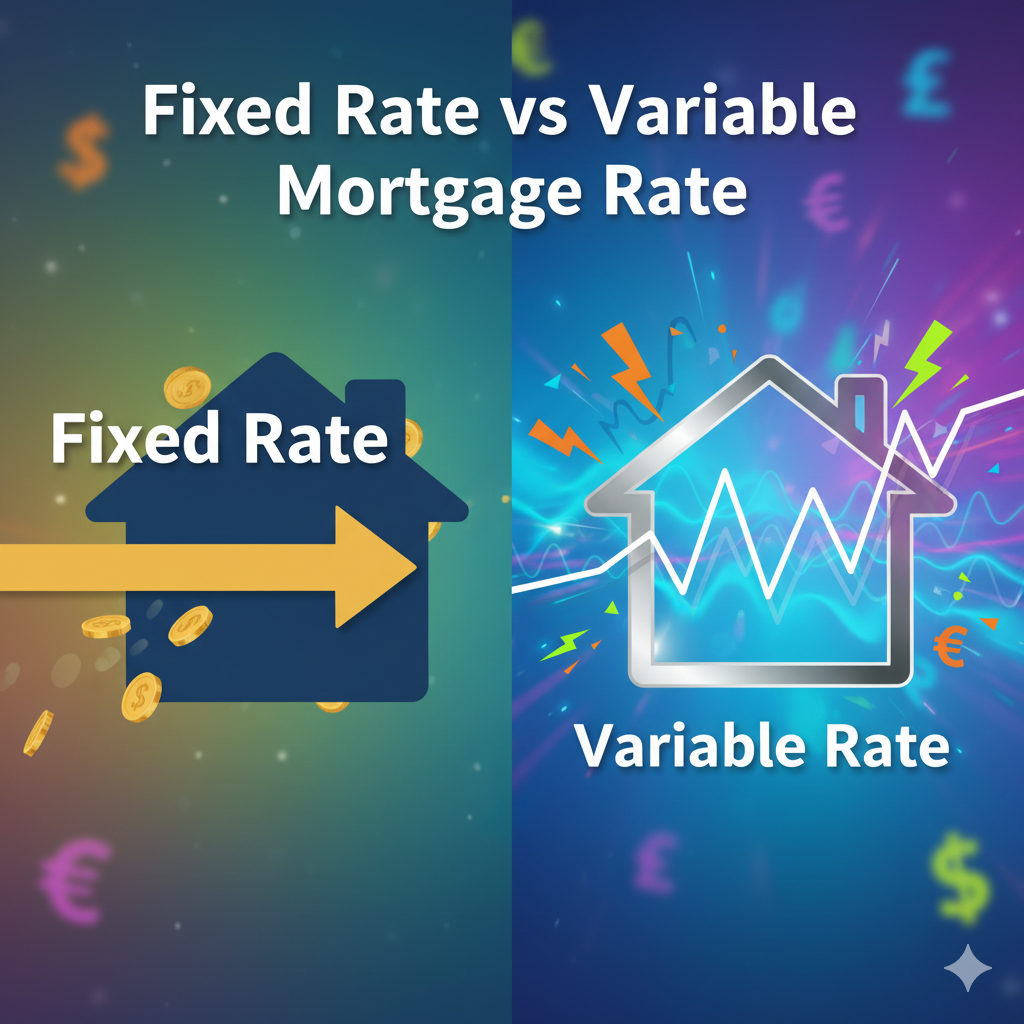
Fixed rate
· Stays the same for your whole term (e.g., 3 or 5 years).
· Based on Government of Canada bond yields (mainly the 5-year).
Bond traders look ahead and try to guess at inflation and future BoC moves, so fixed rates can change even when the BoC hasn’t.
· Good for: predictable payments and budgeting.
Variable rate
· Moves up or down when your lender’s Prime rate changes.
Prime usually changes after the Bank of Canada announces its rate decision (about every 6 weeks).
· Quoted as Prime ± a discount/premium (varies by lender).
Example: If Prime is 4.95% and your deal is Prime – 0.50%, your rate = 4.45%.
· Good for: taking advantage of falling rates (but payments/costs can rise if rates go up).
Quick note:
· Different banks offer different Prime discounts, so two “variable” offers can have different actual rates.
· Some variable products change your payment when Prime changes; others keep the payment the same and adjust how much goes to interest (until they hit a “trigger rate”).
If you’d like, tell me your term preference (3 vs 5 years) and risk comfort, and I’ll translate this into which option/structure likely fits you best right now